
Dental Crowns & Bridges in Greater Noida
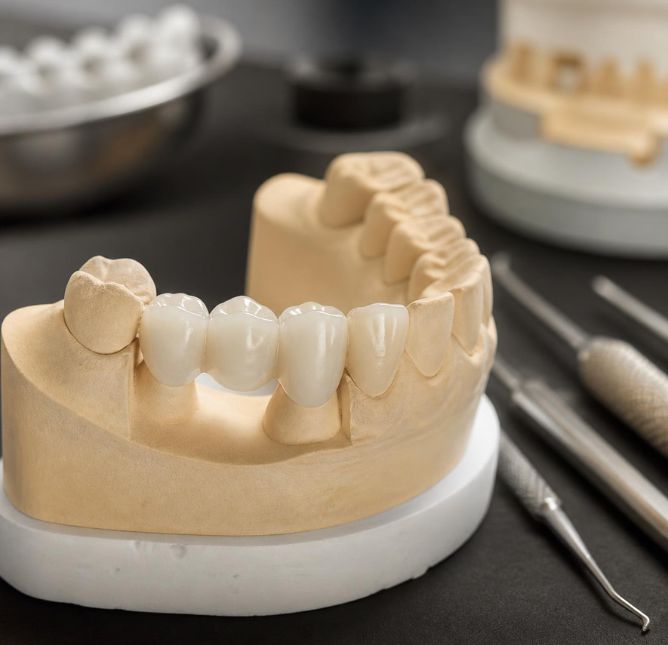
Your teeth do more than complete your smile: they help you speak, chew, and keep your facial structure and oral health in balance. When a tooth becomes weakened, fractured, heavily restored, or is lost, restoring its function and appearance is an important part of your dental care.
Dental crowns and bridges are restorative treatments that protect damaged teeth or replace one or more missing teeth, depending on your clinical needs. Each restoration is custom-made to fit comfortably within your bite and planned with attention to both function and appearance.
At Executive Implant Clinic in Greater Noida, restorative treatment begins with a detailed examination of your teeth, gums, bite, and supporting structures. Led by Dr. K.D. Chaudhary, MDS (Prosthodontics & Oral Implantology), our team plans treatment around your clinical findings and helps you understand the available options before any procedure begins.
Whether you need to protect a weakened tooth after root canal treatment, replace a missing tooth, or restore teeth as part of a full-mouth rehabilitation plan, each case is managed with careful planning and evidence-based dentistry.
Schedule Your Crown & Bridge Consultation
If you have a damaged tooth, a missing tooth, or an existing restoration that needs evaluation, book a consultation with our dental team. We will assess your oral health, discuss suitable options, and explain whether a dental crown, a dental bridge, or another restorative solution fits your situation.
What Are Dental Crowns and Bridges?
Dental crowns and dental bridges are fixed restorations that restore the function and appearance of teeth affected by damage or tooth loss. Both are custom-made, but they serve different clinical purposes, and the right choice depends on the condition of your remaining teeth, bone support, bite relationship, and treatment goals.
What Is a Dental Crown?
A dental crown, sometimes called a "tooth cap," is a custom-made restoration placed over a prepared natural tooth to restore its shape, strength, and function while protecting the remaining tooth structure. A crown may be recommended when a tooth:
- Has a large filling with limited healthy tooth structure remaining
- Has fractured or become worn
- Has completed root canal treatment and needs added protection
- Needs a better shape or appearance as part of restorative treatment
- Supports another dental restoration
Each crown is made to match your bite and surrounding teeth as closely as possible.
What Is a Dental Bridge?
A dental bridge is a fixed restoration that replaces one or more missing teeth. It uses an artificial replacement tooth, or teeth, supported by adjacent natural teeth or other planned restorations, depending on the clinical situation. Replacing missing teeth can help restore chewing ability, maintain spacing between neighbouring teeth, and support bite stability where clinically appropriate. Your dentist will assess whether a bridge suits you after examining your oral health and discussing the alternatives.
Types of Crowns and Bridges
The type of restoration recommended depends on the location of the tooth, bite forces, aesthetic expectations, and how much healthy tooth structure remains.
Types of crowns:
- Zirconia crowns
- Porcelain crowns
- Porcelain-fused-to-metal (PFM) crowns
- Metal crowns
- E-Max / ceramic crowns
Types of bridges:
- Traditional bridge
- Cantilever bridge
- Maryland bridge
- Implant-supported bridge
Our Restorative Treatment Philosophy
At Executive Implant Clinic, restorative dentistry focuses on preserving natural tooth structure wherever possible while restoring function, comfort, and appearance. Every case is assessed individually to find the most appropriate option, based on your individual clinical findings rather than a standard protocol. Treatment planning considers your existing teeth, gum health, bite, and future dental needs, so the restoration fits naturally into your overall oral health plan. You are encouraged to understand each stage before deciding, so your choices are informed by both clinical findings and your own priorities.
Who May Benefit from Dental Crowns or Bridges?
Restorative treatment starts with understanding why a tooth was damaged or lost. Some patients need treatment after decay or trauma, while others seek restoration because of worn teeth, ageing dental work, or missing teeth that affect daily function. Crowns and bridges are recommended only after a full examination of your teeth, gums, bite, and supporting bone, which guides your personalised treatment plan.
A Dental Crown May Be Recommended If You:
A crown may be considered when a tooth needs additional protection or structural support, such as:
- A tooth weakened after root canal treatment
- A fractured or cracked tooth
- A tooth with a large filling and limited natural structure remaining
- Teeth affected by significant wear
- A severely damaged tooth where enough natural tooth remains
- Improving the appearance of certain teeth as part of restorative treatment
- Supporting a planned prosthodontic rehabilitation
Suitability depends on the health and strength of the remaining tooth structure.
A Dental Bridge May Be Recommended If You:
A bridge may be appropriate when:
- One or more natural teeth are missing
- Adjacent supporting teeth are suitable for restoration
- Missing teeth affect chewing efficiency
- Spaces are causing neighbouring teeth to drift
- Tooth replacement is needed as part of a broader restorative plan
Your dentist will also discuss whether other options, such as dental implants, should be considered depending on your clinical situation.
Restorative Dentistry for Adults
Crowns and bridges are commonly provided for adults with a range of restorative needs, from accidental tooth damage to replacing ageing restorations or missing teeth that affect daily comfort. Every recommendation follows a clinical evaluation and a discussion of the available options.
Your Crown & Bridge Treatment Journey
Restorative dentistry follows a structured process so your restoration can be planned, fabricated, and fitted accurately. Each stage evaluates your oral health, prepares the tooth where needed, and checks that the final restoration fits comfortably within your bite.
Step 1: Comprehensive Examination
Your first appointment focuses on your concerns and on evaluating the affected tooth or missing-tooth area. Your dentist may:
- Review your dental and medical history
- Examine your teeth and gums
- Evaluate existing restorations
- Assess bite function
- Check neighbouring teeth
- Discuss your symptoms and expectations
- Explain possible restorative treatment options
If a crown or bridge appears appropriate, additional diagnostic records may be recommended.
Step 2: Diagnostic Records and Treatment Planning
Accurate planning helps your restoration fit comfortably and function well. Depending on your needs, diagnostic records may include:
- Clinical photographs
- Digital or conventional impressions
- Dental radiographs
- Bite analysis
- Assessment of supporting teeth
- Evaluation of gum health
Step 3: Preparing the Tooth
If a dental crown is recommended, the tooth is carefully prepared so the custom restoration fits accurately. For a bridge, the supporting teeth are prepared according to the plan. Throughout this stage your dentist preserves as much healthy tooth structure as clinically possible while creating enough space for the final restoration. How much preparation is needed varies with the condition of the tooth and the type of crown or bridge chosen.
Step 4: Dental Impressions
After preparation, impressions record the exact shape of your teeth and surrounding structures. These records are used to fabricate a custom restoration designed to:
- Fit accurately
- Match your bite
- Blend with neighbouring teeth
- Support comfortable function
Impressions may be taken using conventional materials or digital scanning, depending on the clinic's workflow.
Step 5: Temporary Crown or Bridge
While your final restoration is being made, a temporary crown or bridge may be placed where clinically appropriate. Temporary restorations help:
- Protect the prepared tooth
- Support normal appearance
- Maintain tooth position
- Improve comfort during the laboratory phase
Your dentist will explain how to care for the temporary restoration until your next appointment.
Step 6: Placement of the Final Restoration
Once the laboratory completes your custom crown or bridge, you return for the fitting. During this visit your dentist checks the:
- Fit of the restoration
- Bite alignment
- Appearance
- Comfort
- Contact with neighbouring teeth
Any adjustments are made before the restoration is fixed in place with dental cement according to your treatment plan.
Step 7: Review and Long-Term Care
After placement, review appointments let the dental team check how the crown or bridge is functioning. These visits may include checking bite stability, assessing gum health around the restoration, evaluating neighbouring teeth, and reviewing your oral hygiene. Routine dental examinations remain important for protecting both the restoration and your natural teeth.
Benefits of Dental Crowns & Bridges
Restorative dentistry helps restore the strength, function, and appearance of teeth that have been damaged or lost. Crowns and bridges are planned around your oral condition to support comfortable chewing, protect remaining tooth structure, and maintain oral health. The benefits depend on your diagnosis and the type of restoration recommended.
Helps Protect a Weakened Tooth
When a tooth has been significantly damaged by decay, fracture, or extensive restorative work, the remaining structure may need extra support. A dental crown covers the prepared tooth and may help:
- Reinforce weakened tooth structure
- Restore the natural shape of the tooth
- Improve chewing function
- Reduce further structural damage where clinically appropriate
The need for a crown is decided after evaluating how much healthy tooth structure remains.
Restores Everyday Chewing Function
Missing or damaged teeth can make chewing certain foods uncomfortable or less efficient. A well-planned crown or bridge may help restore balanced chewing by replacing or protecting affected teeth while staying in harmony with your bite. Your dentist evaluates your bite so the restoration works comfortably within your natural chewing pattern.
Replaces Missing Teeth with a Fixed Restoration
A dental bridge offers a fixed option for replacing one or more missing teeth when clinically appropriate. Replacing missing teeth may help:
- Restore the continuity of your smile
- Improve chewing ability
- Support clearer speech where missing teeth affect pronunciation
- Maintain spacing between neighbouring teeth
- Contribute to balanced bite function
Alternatives such as dental implants may also be discussed, depending on your individual clinical situation.
Preserves Bite Stability
When a tooth is missing, neighbouring teeth can gradually drift into the space. Replacing missing teeth where appropriate may help maintain tooth position and support bite stability as part of a comprehensive restorative plan.
Blends with Your Natural Smile
Modern restorative dentistry aims to create restorations that complement your natural teeth. Treatment planning considers tooth shade, shape, and size, along with smile symmetry and bite relationship, so the restoration functions comfortably while integrating naturally with your smile.
Supports Long-Term Oral Health
Restorative treatment is only one part of keeping teeth healthy. Long-term success also depends on daily oral hygiene, regular dental examinations, professional cleaning where recommended, and monitoring existing restorations so new concerns are managed early. Your dentist will explain how to care for your restoration after treatment.
Crown & Bridge Planning and Restorative Technology
Successful restorative treatment begins with accurate diagnosis and detailed planning. Before recommending a crown or bridge, the dental team evaluates your teeth, supporting structures, bite, and overall oral health to determine the most suitable option.
Comprehensive Restorative Assessment
Each patient has an individual evaluation that may include:
- Assessment of tooth structure
- Bite analysis
- Examination of neighbouring teeth
- Gum health evaluation
- Review of existing restorations
- Bone support where relevant
- Smile assessment
- Functional requirements
This helps ensure every restoration is planned around your individual oral condition.
Crown & Bridge Materials
The material recommended depends on the location of the tooth, functional requirements, aesthetic expectations, and your treatment goals. Your dentist will explain the characteristics, indications, and maintenance requirements of the recommended material before treatment begins.
Integrated Restorative Care
Some patients need crowns or bridges as part of a broader rehabilitation plan rather than an isolated procedure. Executive Implant Clinic follows a multidisciplinary model, so restorative care may be coordinated across prosthodontics, dental implantology, endodontics (root canal treatment), periodontal care, cosmetic dentistry, and oral and maxillofacial surgery. This supports comprehensive planning for patients with more complex restorative needs.
Meet Your Treating Dentist
Dr. K.D. Chaudhary, MDS (Prosthodontics & Oral Implantology)
Restorative treatment at Executive Implant Clinic is led by Dr. K.D. Chaudhary, Founder and Lead Clinician, who has more than 21 years of clinical experience in prosthodontics, implant dentistry, full-mouth rehabilitation, and advanced restorative care. As a prosthodontist, his clinical focus includes restoring damaged or missing teeth with carefully planned prosthetic solutions that support oral function, aesthetics, and long-term dental health.
Professional highlights include:
- MDS in Prosthodontics & Oral Implantology
- Graduate of Manipal University
- All India Rank 74 in the AIIMS MDS Entrance Examination
- Advanced training in Full Mouth Rehabilitation using the Dawson Concept (USA)
- Former consultant at Fortis Hospital, Noida
- Former association with Safdarjung Hospital, New Delhi
- Former Head of Prosthodontics for 27 CGHS Dental Dispensaries in Delhi
- More than 1,000 complete denture rehabilitation cases treated
Where required, treatment is coordinated with the clinic's multidisciplinary dental team.
Looking After Your Crown or Bridge
Caring for your restoration helps protect both your treatment and your long-term oral health. After placement, your dentist will give instructions specific to your restoration. General recommendations may include:
- Brush twice daily with a fluoride toothpaste
- Clean carefully around crown margins
- Use floss or bridge-cleaning aids where appropriate
- Avoid using your teeth to open packaging or bite very hard objects
- Attend routine dental examinations and professional cleaning appointments
Keeping the gums around your restoration healthy is as important as caring for the restoration itself.
Routine Reviews
Periodic reviews let the dental team monitor the condition of the restoration, bite stability, gum health, adjacent teeth, and overall oral hygiene. They are also a chance to spot any concerns early and discuss maintenance.
Cost of Dental Crowns & Bridges
The cost of restorative treatment depends on several clinical factors, which may include:
- Type of restoration required
- Number of teeth involved
- Material selected
- Complexity of treatment
- Laboratory fabrication requirements
- Whether additional dental procedures are needed before restoration
Why Choose Executive Implant Clinic for Crowns & Bridges?
Restoring damaged or missing teeth takes more than replacing tooth structure. It depends on accurate diagnosis, careful planning, suitable materials, and regular follow-up.
Prosthodontic Expertise
Treatment is led by Dr. K.D. Chaudhary, an MDS prosthodontist and oral implantologist with extensive experience in restoring damaged and missing teeth through evidence-based prosthodontic care.
Personalised Restorative Planning
Every restoration is designed after evaluating your bite, oral health, existing teeth, and long-term goals, so recommendations suit your individual clinical condition.
Multidisciplinary Dental Care
Where restorative treatment forms part of a wider rehabilitation plan, specialists in prosthodontics, implant dentistry, endodontics, cosmetic dentistry, oral surgery, and periodontal care work together to deliver coordinated treatment.
Modern Clinical Environment
Executive Implant Clinic combines evidence-based dentistry with contemporary diagnostic methods to support accurate planning and carefully delivered restorative care. Specific technologies will be listed once confirmed by the clinic.
Frequently Asked Questions
What is the difference between a dental crown and a dental bridge?
A dental crown is a custom-made restoration that covers and protects a damaged or weakened natural tooth. A dental bridge is a fixed restoration designed to replace one or more missing teeth by using adjacent supporting teeth or other planned restorations. The most appropriate treatment depends on your clinical examination and individual oral health needs.
When is a dental crown usually recommended?
A dental crown may be recommended when a tooth has been weakened by extensive decay, a large filling, fracture, significant wear, or after root canal treatment. Your dentist will evaluate the remaining tooth structure before deciding whether a crown is appropriate.
Can a dental bridge replace more than one missing tooth?
Depending on your clinical condition, a dental bridge may be designed to replace one or several missing teeth. The number of teeth that can be replaced depends on factors such as the health of the supporting teeth, bite forces, and overall treatment planning.
How long does crown or bridge treatment usually take?
Treatment duration varies depending on the complexity of your case, laboratory fabrication time, and whether additional procedures are required before restoration.
Will my dental crown or bridge look natural?
Dental restorations are designed to complement your existing teeth in colour, shape, and proportions. Material selection and treatment planning are personalised according to the location of the tooth, your aesthetic expectations, and clinical requirements.
How should I care for my dental crown or bridge?
Good oral hygiene remains important after treatment. Your dentist may recommend brushing twice daily, cleaning carefully around the restoration, using floss or specialised cleaning aids where appropriate, and attending routine dental examinations to monitor the restoration and surrounding tissues.
Can a damaged crown or bridge be repaired?
The right approach depends on the type and extent of the damage. During an examination, your dentist will assess whether the restoration can be adjusted, repaired, or whether replacement is the more suitable option.
Are crowns and bridges suitable after root canal treatment?
In many situations, a dental crown may be recommended after root canal treatment to give the remaining tooth structure additional protection. The need for a crown depends on how much healthy tooth remains and your individual clinical condition.
What materials are available for dental crowns?
Several restorative materials may be available, depending on your clinical needs and the location of the tooth. Dentist will explain the advantages and considerations of the recommended material during your consultation.
How do I know whether I need a crown, bridge, or dental implant?
The most appropriate option depends on the condition of your teeth, gums, supporting bone, bite, and overall oral health. After a comprehensive examination, your dentist will discuss the available options and explain which approach suits your individual needs.
Schedule Your Restorative Dentistry Consultation
A damaged or missing tooth can affect more than your smile. Restoring teeth at the right time may help support comfortable chewing, balanced bite function, and long-term oral health. If you have a weakened tooth, an existing restoration that needs evaluation, or one or more missing teeth, our dental team will carry out a comprehensive assessment and explain the restorative options available to you. Every recommendation is personalised, so you can make an informed decision based on your clinical condition and treatment goals.
Contact Executive Implant Clinic
Executive Implant Clinic
- Address: S-11, Gamma Shopping Complex, Near PNB Bank, Jagat Farm, Greater Noida, Uttar Pradesh 201310
- Phone: 99719 63789
- Email: drkdchaudhary99@gmail.com
- Areas we serve: Greater Noida, Noida, Delhi NCR
Medical disclaimer: This page is for general information and is not a substitute for professional dental advice, diagnosis or treatment. Individual results and suitability vary and can only be confirmed after a clinical assessment